Thriller author, M.H. Callway kindly asked me to be a guest on her ever intriguing blog. You can read it the post here.
M.H. Callway is rapidly making a name for herself in Canada’s book scene. Her novel, WINDIGO FIRE, has received glowing reviews and was recommended by the Huffington Post as a prime choice for book clubs.
The untamed land and equally untamed characters of Northern Ontario, when mixed with bears, murder and a forest on fire, make for tale you can’t put down. The author draws on her own experience with northern mining to paint a vividly authentic portrait of a wild place few of us will ever be privileged to visit.
I am delighted to appear in her blog and highly recommend you enjoy her other far ranging entries.
Two miles of country road lay between my home and village school. There was only one house and long stretches with nothing but woods and pasture to be seen. A daunting trip for the short legs of a little kid, but also full of delights along the way. With my neighbour children, from even farther up the road, I learned every foot of our route. In winter, we knew where the biggest snowdrifts were and how to get the best shelter from the wind as we trudged along, pulling the sled we taking to the school hill. When the snow melted into rivulets, we could build networks of dams, channels and rivers of our own making in miniature fantasy landscapes.
In spring, there was that joyous day when we could leave our heavy galoshes at home and trip to school in shoes, feeling so incredibly light footed. It was from the road we heard the first trilling call of the red winged blackbirds telling us they had returned to the marsh. We vied fiercely with each other to spot the first bloodroot, adder tongue, trillium or violet blooms pushing up among last year’s brown leaves in the woods beyond the fences, signalling true springtime. We picked wild honeysuckle and sucked the sweetness from the blossom ends. How keen-eyed we were at finding where the birds nested along the way. Each day we’d scramble through the brush to see if the blue robin’s eggs had hatched. We watched the fuzzy babies with fascination until, one day, the empty nest told us they had flown. When a killdeer flapped about in front of us, faking a broken wing to lure us away, we unerringly found the almost invisible speckled eggs in the roadside gravel nest. Easily, we caught newly hatched killdeer chicks and put them into a field, safe from traffic.
Ever intriguing roadside
Bouquets of daisies and purple phlox protruded from our fists. We knew where the wild strawberry patches were. We could find the gooseberries, black currents and wild raspberry bushes and came home, all scratched up, our mouths stained and red. There were tongue puckering wild grapes from great tangles of vines in the ditches. Then there came the siren call of roadside apple trees laden with green apples. We went to school with our pockets stuffed to distribute to our friends. What a thrill to eat them surreptitiously in class, sometimes to the point of a green apple stomach ache. Later on, we munched on the ripe apples all the way home, careful to eat around the wormy parts. No apples have ever tasted so good again. No fence kept us out. It did not occur to us to stay on the road if we didn’t want to. Woods and fields were our domain so long as we arrived in time to escape scoldings for too much dawdling. We would see rabbits and groundhogs, squirrels, chipmunks, skunks, foxes and raccoons. We were adept at skirting roadkill, holding our breaths against the smell.
We knew where the wild birds nested
Just before the village was a rushing creek where we could race sticks and watch them fly down over the waterfall. Then came the village store offering blackballs, toffee, licorice or slices of bologna if we had some coins. Chewing on our prizes, we would take a final push on the swings or swoop down the slide in the little park before finally arriving at the school door.
Do these pleasures exist today? For children, always. Even a city sidewalk can yield a gripping array of dogs, squirrels, gnarled trees, fallen leaves, pet shop windows, anthills and a hundred other attractions young eyes can spot. A walk to school is an education in itself. An education sadly denied to children now carefully shepherded onto school buses or endlessly driven about by their paranoid moms and dads.
We’ve had a bit of a January thaw this week, a good time for a fresh air hike along the road. Also a good time to see how many of my neighbours in the woods have also been on the move. The muddy shoulders by the pavement tell all. So I see the deer have been busy at the corner they seem to favour near the house. Since they gambol there at night, I can never see them in the dark but they seem to like the wide, shallow ditch and hop over the page wire pasture fence with no trouble at all. They have caused more than one car to swerve wildly or go in the ditch when they suddenly loom in the headlights. A couple of years ago, there was a high speed collision at the dark, requiring fire truck, ambulance and towing for the battered vehicle. Needless to say, there wasn’t much left of the deer except a major stain on the asphalt that took two rainstorms to erase.
Deer cross the road lightly.
The foxes and coyotes like to trot along the road also, especially at night. After the county goes to bed, the road can go for hours without a single vehicle. You can see where they have made periodic excursions into the brush to check out possible snacks before returning to their convenient human-made trail. Last year, I used to look out and see a fox that had a regular schedule, setting out down the road in one direction and often returning later with a rabbit or squirrel as her prize. A mother dutifully bringing home dinner for a den of hungry cubs.
When there’s a warm spell, it is not unusual to spot raccoon tracks out to supplement their diet if they can. Raccoons don’t actually hibernate, like bears, but can sleep in their dens for weeks during very cold weather, living on the fat they worked so hard to store up in summer and fall. I was surprised to learn that a lot of fat builds up in their tail which wraps around them as they sleep to keep them warm. On milder days, they venture out to look for acorns, frozen berries, corn left in the field and even a field mouse or two if they can catch it. So adorable looking but they can fight off a wolf in battle.
A fisher, in case you were wondering.
Almost obliterated by tires, I see the paw prints of one of our fiercer hunters, the fisher. The fisher is large member of the weasel family that hunts snowshoe hares and other small mammals. It is one of the few predators that can kill a porcupine. Farmers in the neighbourhood claim all their barn cats disappear once a fisher arrives. The fisher is one of the reasons my kitties, much as they hate it, have to stay inside. The other reasons are coyotes, foxes, mink, large hawks and the road.
Most everywhere, I see the tracks of crows who seem to like to strut along the road shoulders while they carry out raucous conversations with each other. They are interested in road kill, however small, and are so canny about traffic that you never see a dead crow by the roadside. This is not true for their relatives, the ravens who have have been showing periodically in recent years. You can tell them from their deep, hoarse croaks and heavy beaks. Perhaps they have not learned so much about cars in their northern homes and don’t know when to jump fast when they visit us in the south.
Now I’ve added my own tracks to the mix. Good to know I’m just another of the locals frequenting this particular mile of road.
Coyotes and foxes use the road as a night time highway.
Only on certain special days can you still see them, the marks left on the land by those first farmers who wrestled the walking plow behind a team of horses. The field I see over the fence likely hasn’t been worked for a hundred years. No doubt a long ago farmer gave up trying to wrest cash crops from its poor shale soil and turned it over to pasture. For a century, grazing cattle and horses have tramped its mud into ankle twisting hummocks where the swale encroaches and eaten its tough wiregrass down to the gravel each dry summer. And now, under the assault from the wild, that pasture is slowly being swallowed by the march of red cedars and creep of the spreading beaver pond.
Hard labour for man and beast.
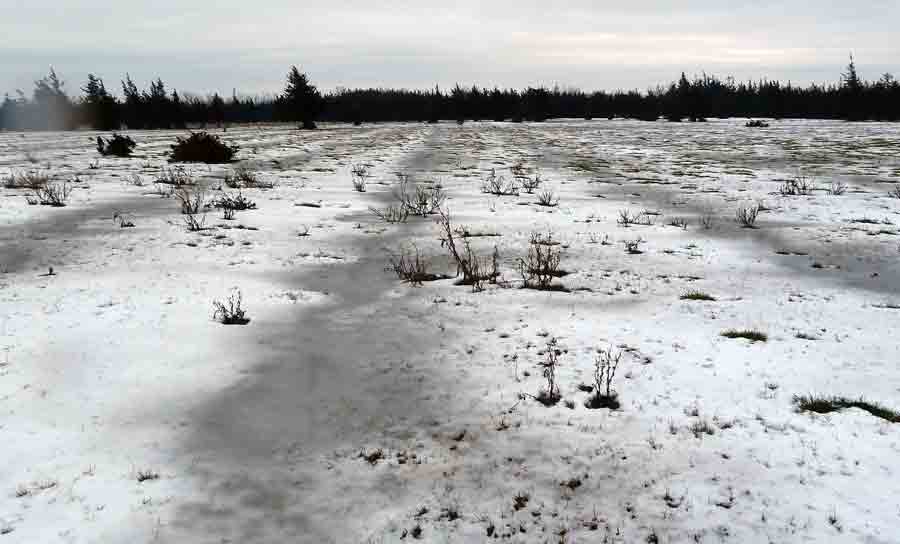
On rare days, though, windblown snow will trace the outlines or melt enough to let the ancient furrows reveal themselves, still there, still a testament to the skill of those who laid them down so long ago. The strips of plowing, called lands, are far too narrow for any modern tractor. Setting out his section, not many yards wide, the farmer methodically plowed up one side and down the other until the strip was finished. Then, moving over, he began another strip. And because he now returned in the opposite direction from the furrows on his first strip, his plow turned over the earth in the opposite direction, leaving an open gap between the lands. This gap was known as a dead furrow, a permanent hollow that would remain even when softened by disking, harrowing, planting and rolling. The next year, the farmer would turn over the same lands with his plow, imprinting the dead furrows again on the face of the field.
Blown snow catches in century old dead furrows.
Their arrow straightness, acre after acre, is a testament to the skill and dead eye reckoning of these early plowmen. My old dad used to say one of the best days in farming was the first spring day upon the land. It doesn’t take much to imagine the vigor of the morning dry enough and warm enough to thrust the plowshare into the earth. The team, out of shape from the winter, had to be eased into the work until their powerful muscles hardened. It would be too pleasantly cool for sweat and the torment of horse flies that would come later. The moist soil would turn over with a satisfying, steady hiss, burying the previous year’s weeds and stubble and disappointments underneath. Eating his noon meal from a honey pail brought to the field by a skipping youngster, the farmer would toss his apple cores into the fence line where wild apple descendants still grow, tasting deliciously of long forgotten varieties. Home in the evening, weary and ready to sleep, the farmer could hit the hay with a happy sigh. With his own hands, he had just created a blank canvas of earth ready to receive a new year’s seeds, plans and hope. A year certain, he was sure, to be better than the last.
The ghostly lines he has left advise me to think the same thing too.
Yes, very weird. It was 11°C today and the forecast for Christmas Eve is 15°C (almost 60°F). Other than a touch of frost weeks ago and a couple of snowflakes, winter had been totally absent. The grass is still growing and green leaves appear underfoot. Skiers are so out of luck that some ski resorts have reopened their summer activities.
They claim that El Niño, the strongest ever, is responsible for this odd lack of change. Last year we were deep in snow since November with the snowplow butting its way up and down the road. Visitors could not get to the farm due to ongoing blizzards. The cold was so deep my reliable well managed to freeze solid three times. Two years ago, at this time of year, we were frozen to the gills with a spectacular ice storm, cutting out power and bringing down trees all over the place. I could hike for miles over the smooth, flat surface, never once breaking through into the snow underneath.
What it should look lke.
But now, it’s sort of like September outside with rain and puddles instead of ice. Without snow pack the water table will be low next year, perhaps bringing drought and more failed wells. Lots more insects will survive to plague crops and humans. Gardeners are worrying about swelling buds, bizarrely fooled by the temperature. Farmers see crop damage in the future.
The squirrels are waddling about getting fatter and fatter because they are able to just keep on eating. The ponds are crammed with ducks and geese who seen no need to take to the skies for sunnier climes. They are so well insulated they don’t even notice cold water. So long as there is food and a place to swim, they will laze about the waterways. They literally have to be frozen out. Our human snowbirds, though, have flitted to Florida long ago. Nothing but warm water for them.
Geese see no need to leave for the sunny south,
However, Municipalities are saving a bundle on snow removal, unlike last year when their budgets were blown by February. I can still bike on roads that have yet to taste sand or salt. And it only takes a couple of chunks of wood to heat the house. No one is complaining much despite the bad news for nature. I only hope El Niño takes itself away by springtime lest it get ideas about frying us to a crisp in the summer.
Yes, life starts out cute. Baby robins, killdeer chicks, ultra adorable little red squirrels and, if you’re lucky enough to spot them, fox cubs or a fawn. That’s one part of life out in the country. There’s also the other part–the end. Any stroll about the back pastures will turn up vivid evidence that denizens of the wild can meet their demise abruptly out among the cedars and long grass. Creatures that have had their party time and now pay their debt to the food chain so others can waltz on. And I’m totally leaving out road kill which anyone can see any day of the year. Raccoons, bunnies and squirrels with poor speed perception or fatal indecision in front of a vehicle do not make it to the other side of the road. Animals in the fields and woods have other things to worry about.
So I’ll spare you the ruminations on mortality and show a few pics of what I see when hiking about our rural neighbourhood. Enjoy the stroll. Be glad when you get home again.
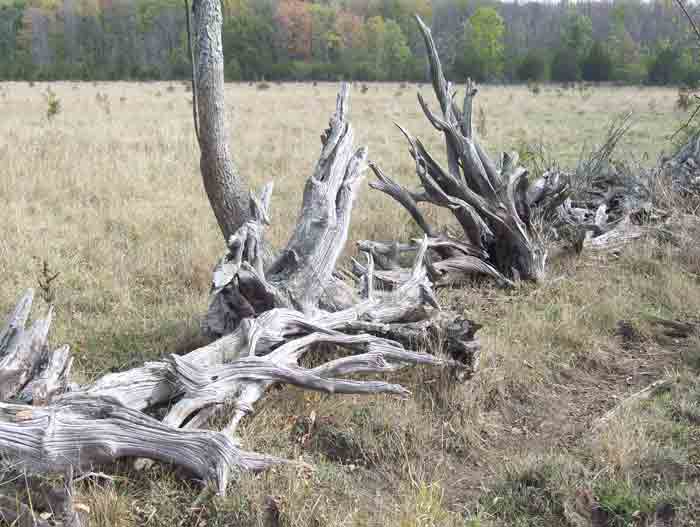
Walking around, I don’t think of fences much, except that they be in enough repair to keep the cattle in. Yet almost 200 years of history lie along the edges of the fields. First there is the remnants of the old root fence that the first settlers put up to keep their livestock in. They just laid torn out stumps side by side so that the entangled roots would baffle horses and cows. Then came the split rail fences. Made of practically indestructible red cedar. Miles of them are still in use in the county, the rails perhaps a hundred years old. Usually, they just need the odd cross piece straightened and a bit of new wire to keep them from sinking down into the grass as so many have done along abandoned farmland.
“Dead man” stands top ground and anchors barbed wire fence when it is too rocky to dig post holes.
Next came the era of barbed wire. Nasty stuff to handle and the cattle quickly learn to give it a miss. Barbed wire must be anchored at each end and stretched tight in the middle before it is attached to wood or metal posts. Around here, the land consists of several inches of shale over limestone bedrock. So you can’t dig a hole for fence posts. You have to actually drill a hole in the rock to put in a steel post. Once in, those posts don’t ever come out again. The anchors, in earlier days, were inventive structures called “dead men”. A “dead man” consisted of a circle of posts standing atop the ground and held upright with metal hoops, usually from old wooden wagon wheels. The circle of posts was then filled with rocks picked up and tossed into the middle, making a column heavy and strong enough to anchor the fence on one side of a field.
Barbed wire up close. Ouch!
Next and last came page wire with woven squares small enough to keep in anything from a sheep up. When Hurricane Hazel blew down most of the rail fence along the road, a major loss, the farm got lucky. Road improvements brought a magnificent page wire fence put in by the township which stands firm and proud to this day. It has survived falling cedars, shrubs trying to lift it from the bottom and assorted vehicles spinning into it off the road. Some have even rolled right over it, spreading their broken glass where cattle graze. But, straighten the posts, pull the page wire up again and the fence is back in business.
Page wire fence still standing strong after sixty years and good for another sixty more.
“Good fences make good neighbours”, said Robert Frost. They make happy owners too.
Out riding my bike. Tiny white things bounce off my knees. What? What? The clouds have dandruff? I’m being pelted by miniature albino smurfs?
The white things are cold. They are hard. They melt at my touch but, ominously, not on the road.
Find the parka. This is on its way.
Then I get it. Winter! Skipping the charming fluffy snowflakes and starting out with a hammering of hail. Before the end of the day, the ground was covered with crunchy white patches, as the unmelting pellets gathered in hollows and crevices. This morning, windshields need scraping, the grass is stiff with frost as far as the eye can see. Now the sun is out and doing its thing. The whiteness has retreated to mere glimpses under the shade. But somewhere behind the green pastures, the warming, windless air and the bare pavement, winter is grinning. We all know the next frosty touch will feel more like a whack on the side of the head.
Find the snow shovel, toque and down parka. Here we go again.
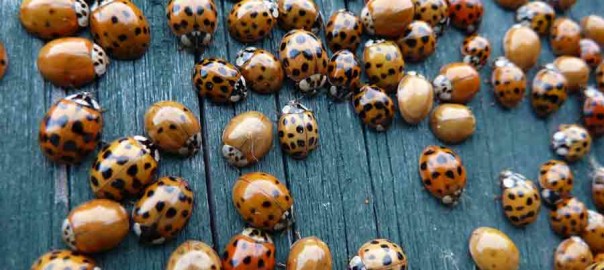
It’s November. It’s almost summer warm. And the ladybugs have gone frantic.
Let me in! Let me in! Oh please, let me in!
Just when we thought all the insects had been done in by the cold, they come barreling out on this sunny day, trying madly to find some refuge from the coming snows. All of a sudden, ladybugs are crawling all over the windows, trying to get in. They run anxiously up and down, fly off and come back for another attempt as if they know there is heaven and safety inside.
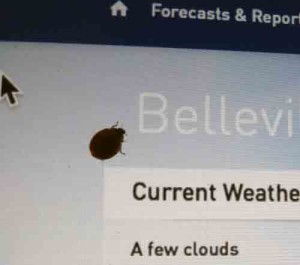
They march over the warmed bricks of the house and congregate on the sun heated shed door as if there is a better chance in a crowd. Some do get into the house and head straight for the sunny window or the computer screen. When they fall off, they end up as cat toys or little flat corpses for foolishly walking across the floor.
Made it onto the computer. Now to find the heat source and move in.
Despite their panic stricken and well founded fears, there nothing they or I can do to ward off the oncoming winter apocalypse. So carpe diem as the Romans say. Little bugs, enjoy, enjoy, enjoy the last day you’ll be warm enough to move this year.
Hey, it’s Halloween. So I’ll toss out the question that has bugged me for years. Why are nearly all the strange creatures we encounter on screen and in books, in a such a state of fury. Why are they bent on destroying everything they encounter? Which is mostly us.
Oh, there are some pleasant ones like the Iron Giant and ET. But generally speaking, the creatures that crawl out of tombs, escape from labs or drop in from the galaxy, immediately go on a rampage, trashing or devouring anything in their path. I’m still traumatized from seeing War of the Worlds as a kid. For weeks, I wondered when the Martians would vaporize my house and all within. There is the Blob out to engulf any life form. Triffids march to kill, toothed horrors erupt from bodies of water or from the very earth (Tremors) to exterminate whatever they can.
All this is replicated in greenish Halloween masks covered with oozing warts and snarling in full attack mode. No matter how weird the monster, they have two requisites: evil, bugging eyes and multiple rows of sharp, slavering teeth. All the better to eat us with.
So why all the anger and running berzerk? Why don’t the werewolves just sniff lamp posts and enjoy the leash free dog park? Can’t the visiting aliens go sightseeing and thank us with a host gift of super advanced technology? The undead might want to be grateful they can walk again and catch up on the latest news with their living relatives. Mummies could politely ask to have their rotten old wrapping replaced with wrinkle-free, non allergenic modern fabrics. Crazed lab beasts might better spend their time trying out restorative nature cures. How about the rogue robots shut down to rejig their whacky internal programming instead of wasting their batteries running amuck.
So, creatures of flesh and metal, can’t we be friends in the future? We’ll get over your dangling eyes and putrid smells. And you block out the the idea that humans are too delicious to resist. Block it out hard enough and the bargain might hold.
 M.H. Callway is rapidly making a name for herself in Canada’s book scene. Her novel, WINDIGO FIRE, has received glowing reviews and was recommended by the Huffington Post as a prime choice for book clubs.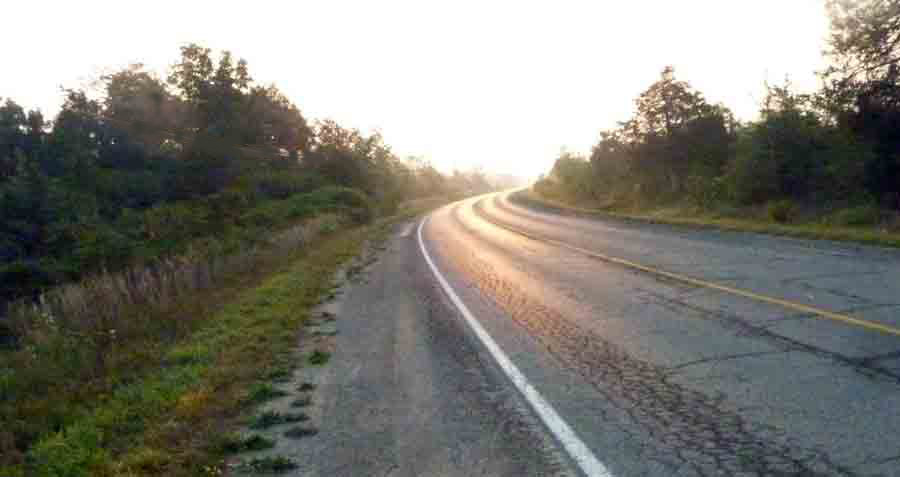




 The ghostly lines he has left advise me to think the same thing too.