A Long and Winding Life
Bill, one of five siblings, was born in 1909 in Dollingstown, Northern Ireland, a village south of Belfast in County Down. His father, like his grandfather before him, was a damask weaver. He wove fine damask on a loom at home, a skill only a handful of people in Ireland still know how to do today. His mother was a Belfast girl descended from the Fitzsimmons, a family said to have once been wealthy enough to bail the city out of trouble with loans a couple of centuries back.
There was no money or education in the family in Bill’s time. In the 1910 census, Bill is one year old and his ten year old sister, Minnie, is listed as the only one in the family who could read and write. His parents signed with Xs. Like his working class mates, Bill left school at fourteen to work at whatever he could find. He helped a horse dealer, picked potatoes and, out in a potato field, describes the wonder of seeing his the first ever airplane fly over.
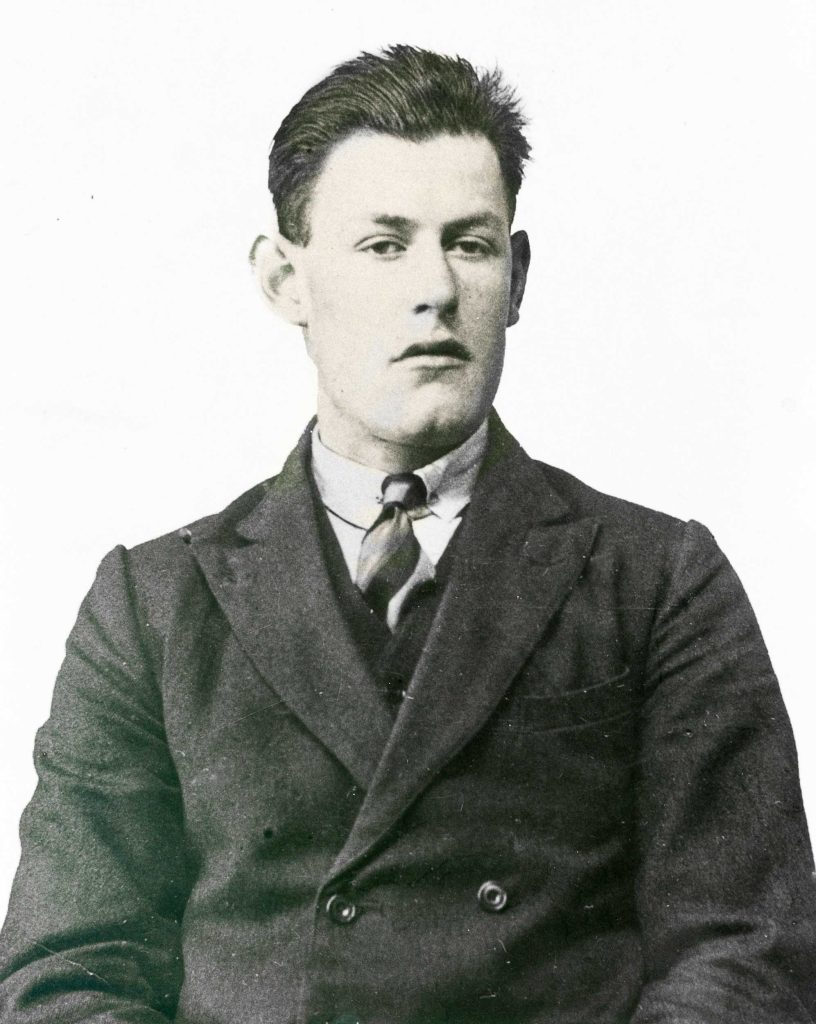
At age nineteen, Bill followed his older sister to Canada, intending only to stay a short while, make some money and return home with his pockets full. However, he arrived in Toronto, Ontario in 1929, just in time for the Great Depression.. He was destined to never leave Canada until a couple of overseas visits when into his sixties. He never saw his father or mother again.
He worked for a Toronto storage company through the Depression and was rejected for enlistment in WWII due to sight in only one eye. Experience on farms near the city gave him the courage, in 1947, to buy his own farm in Prince Edward County, starting out with $200 and wide-eyed hope of going into market gardening. He purchased the property from The Hospital for Sick Children in Toronto where it had been donated earlier by a local storekeeper in a late fit of conscience after he had cheated the previous illiterate farm owner out of the land. To finance the farm, he sold two lots in what is now downtown Toronto, but then way out on the city’s ragged edge. There are probably posh condo towers on them now.
The farm, in Sophiasburgh Township was near a village with a two room school, two general stores, one church and some houses spread along a steep hill. The farmhouse, due to its long lane from the road, never had electricity even after power lines finally reached the district. It remained a 19th century outpost with oil lamps, an outhouse and a hand pump on the well when everyone else had electric lights and running water. That house eventually burned down allowing Bill and his wife, Peggy to move to a house with electricity and a furnace on adjoining land he had just bought.
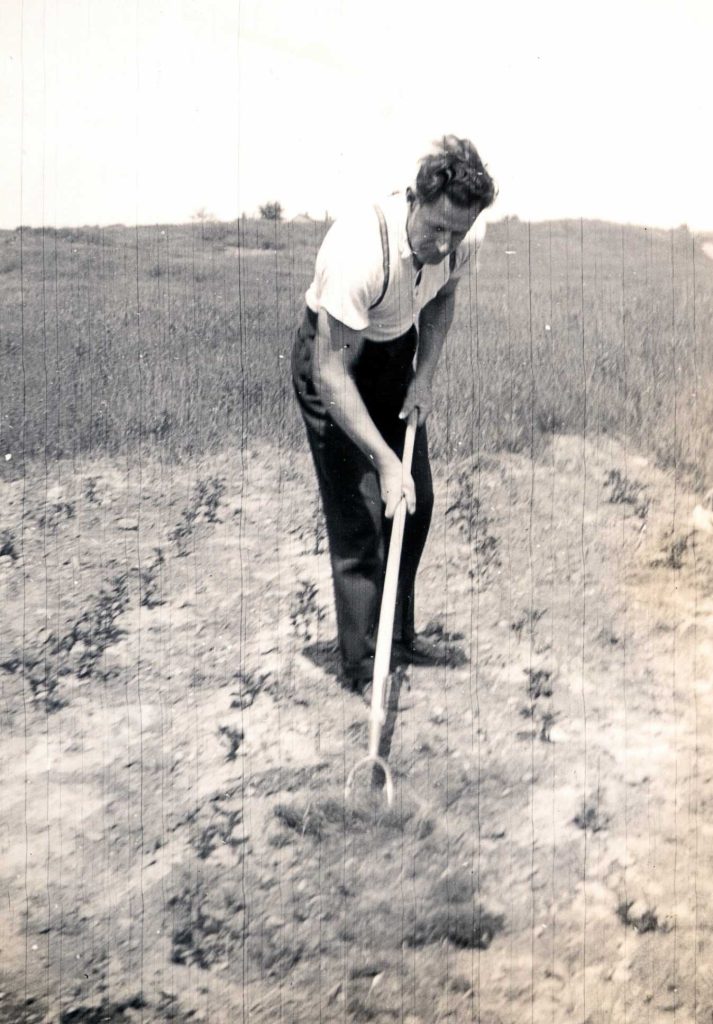
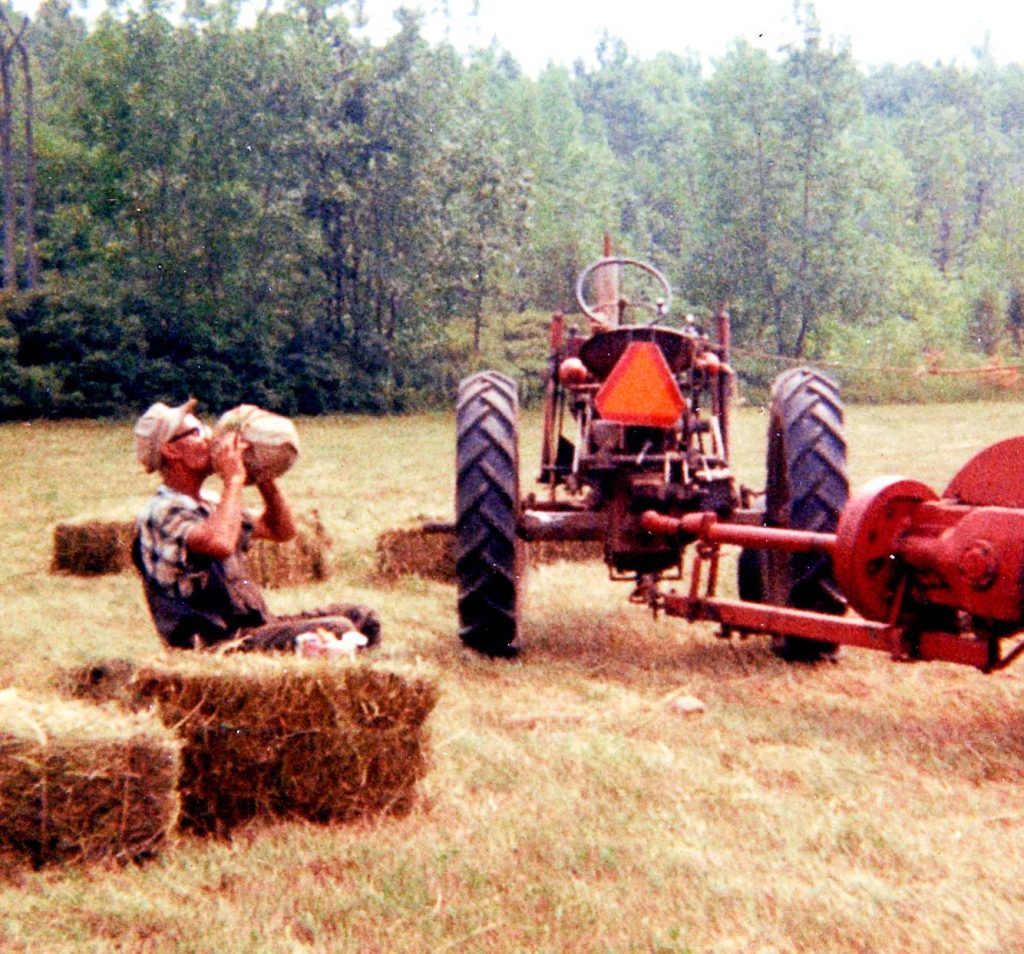
The market gardening never worked out as there was no market amongst other farms that all lived out of their own gardens. Regular farming was the ticket. Corn, wheat, oats, milk cows and tomatoes. Lots of tomatoes grown under contract for the canners in town. At the time, Prince Edward County was known as the Garden County of Canada supplying fruit and vegetables for the many canning factories all around. All this before these small factories could no longer compete with the big national companies and eventually shut down so the county lost its title. Bill worked the land with horses until he could afford his first tractor. He cut and sold firewood in the winter and also milk from his cows until regulations demanding new equipment made milk in cans no longer viable. After that came beef cattle and long hot days of haying to fill the barn with bales of hay to feed them through the cold months.
Bill’s big day of freedom was the day he turned sixty-five. He did a little dance for joy in the middle of Belleville mall. Now he was now eligible for the old age pension and no longer had to battle for every meal and gallon of gas.
In later years Bill cut wood for his basement wood furnace on shares with a neighbour and looked after Peggy who got Alzheimer’s disease. After her death he was left alone in the farmhouse. For a while, he kept up a lively social life over the phone with his two friends, Roy and Emma. Roy was a longtime farm neighbour and Emma he had known from Ireland. They talked and joked several times a day. Then Roy moved into a retirement home, losing all interest in food and the telephone. Emma was suddenly whisked away to British Columbia by her daughter and died shortly after from liver cancer.
Other problems besieged Bill. He lost is driver’s license after a minor traffic accident in a heavy snowstorm required him to retake the driver’s road test. After nine efforts to convince the instructor that other drivers, “ Got brakes, don’t they!” he gave up. Then creeping macular degeneration began to affect his one good eye. His other eye, dim since birth, was only able to perceive light. An operation, for which he scraped together a whopping $400 in the 1930s Depression era, had no effect. When Bill turned ninety, an eye doctor, fascinated with the problem, performed a corneal transplant. That, too, had no effect.
So Bill decided to write.
He got out my old Smith Corona typewriter, on which he could only type with one finger, and only see capital letters in bold, and set out to tell the tale of Fearless Pheobe Croiner, hard punching farm girl, super model and world class soprano.
I had no idea of the extent of this until after his death when I found the one foot high stack of brown envelopes containing hundreds of pages of Phoebe’s adventures. Bill picked a lot of tomatoes, grew a lot of corn, pitched a lot of hay, plowed, disked and planted a lot of acres that fed a lot of people. So now it is only right that his other major produce, Fearless Phoebe, should go out to meet the world.