Blog

Learn. Relearn. Write, Write, Write.

KeyboardBack from a week long writing retreat for novelists.   Learned that I have forgotten there is actual technique behind the novel.  I just write it.  Learned how to mine my own life story for material.  Wish I had a more exciting life.  Learned that novel is a person in a place with a problem and a plan. The plan doesn’t work.  The story gets interesting. The problem gets worse. Learned that readers wish they were the character, feel they are the character or thank the heavens above they are not the character.  Wonder where my characters fit.  Learned the narrator is the teller of the tale.  Everything we know is because someone told the tale. Vast tracts of history are lost because the teller was missing.  Learned writers of all levels are endowed with loads of potential and imagination. Learned one is never done polishing the craft.  Back to the keyboard renewed, sobered and enthused. Thanks, Teacher. A novel is on the way.
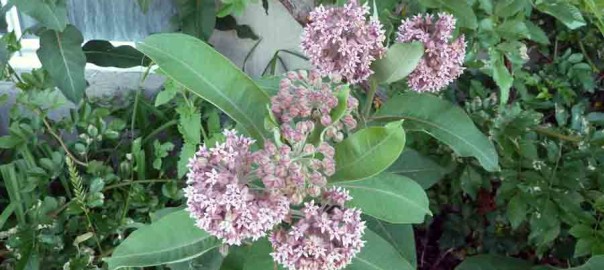


Keeping Milkweed in my Garden. For the Monarchs

On a farm, any plant with “weed” at the end of its name is an enemy to be destroyed. Pigweed, ragweed, pineappleweed, bindweed, knotweed, chickweed all come to  bad end at our hands. So did milkweed.

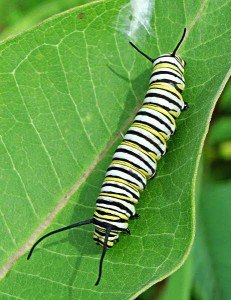
Monarch_butterfly_caterpillar

Monarch caterpillar. Bright colours tell predators that is bad-tasting and poisonous.

But now milkweed has emerged as the hero of the Monarch butterfly, the only thing their larvae eat before they pupate and turn into butterflies.  With the loss of milkweed comes the loss of Monarchs.

Monarch butterflies live life on an epic scale.  For all their size, they survive about eight months in the wild and migrate all the way from Canada to Mexico for the winter.  Then another generation migrates north again, a truly remarkable trek for a creature that weighs half a gram.  Along the way, they need to lay eggs and reproduce.  The caterpillars need milkweed to eat.

Herbicides, agribiz, logging and climate change have reduced the milkweed available and hit the butterflies so hard that now the Monarchs that make it to Mexico are down to only one fifteenth of what they were as recently as 1997.

Alarmingly, the number continues to drop.

I have seen scarcely any Monarchs this year when they used to be common. I can’t stop climate change, I can’t stop agribiz so I do what I can.  I save every milkweed plant I see, including the ones in the middle of my flower beds.

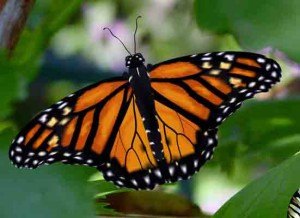
Monarch

Yes, it can fly all the way to Mexico. What a tiny superhero!

This is an emergency. If you want Monarchs in your garden, I suggest you start saving milkweeds too.


Sometimes You Gotta Love a Marketing Pic

I stumbled across this when wandering the web.  Like nearly all of us, I’m pretty impervious to marketing. The slicker it is, the more I resist. However I completely fell for this one which advertises a Nova Scotia dairy that has been serving its community for 90 years.

The website is charmingly confused so that “About Us” leads to chat about calcium, package recycling and lactose intolerance.  If you engage with the  “Contact” page, you will end up with home delivery.  If you try “Recipes” you get tiny videos of startled farmers ambushed  by women who  plant a kiss, then bolt out of sight across the pasture.

They even confess that they used a little salt to get the cow to kiss Willy.  No ad agency photographer would let the public in on such a secret.

And they are very heavy on the recipes, which seem to be generously contributed by the very farm women whose cows provide the milk.  That’s keeping things close to home.

Good to know regional business chugs on, keeping their personality, doing things their own  way.   So whip up a yummy batch of Jeanie’s brownie pudding and salute the happy cows of Nova Scotia.


High Fiving the Past. The Really Really REALLY Distant Past

27,000-Handprint2

Cheery greeting from 27,000 years ago.

Looks like  a kid was messing about with spray paint just this morning, doesn’t it.  When you want to make art,  a hand print is about the first impulse.  Simple, totally yours, a fun way to tell other folks  that “I was here”.

Well, this hand print clocks in at 27,000 years old.  Just about the earliest ever. It’s is from the Pech Merle cave in France which is sports seven chambers filled with brilliant murals of spotted horses, galloping reindeer, woolly mammoths, people and, of course, hand prints.

I imagine some rainy evening after the deer haunch was gnawed until everyone was full and the fire crackling with soporific warmth and good feeling. The hunters nod off, the women plan how to use the fresh hide, the young folks get bored. One of them scoops up some red ochre and dabs it round a hand held against the pale rock wall.  Then dabs half circle of spots around it just to jazz it up a bit.

CaveHorse2

After finishing the spotted horse, the artist could not resist adding a personal hand print too.

When the hand is whipped away, the print shows up brightly in the flickering light, a vivid calling card that remains to this day.  Someone back there is waving hello to us, a hand held up in an exuberant  high five.

So let’s high five back to a distant ancestor whose DNA we very likely carry in our genes. DNA may link our bodies.  The hand print takes us directly back to that ancient world of cave dwelling.  Yeah, the hand prints says, despite the woolly mammoths, they were just like us.


Thanksgiving Ahead. Start the Turkey Now.

BabyTukeys2

Can’t wait to get out of this box and see the world.

In case any of you are wondering what your turkey looks like before it arrives on your table, here are a couple of pics.  It’s May and turkey poults (what baby turkeys are called) arrive at the local farm store  in cardboard boxes.  They await pickup by their new owners who ordered them early in the year.

BabyTurkey

I plan to grow into a handsome fellow.

They may look like chickens but you can tell they are turkeys by the little knob on their face which will grow into the distinctive red snood that hangs over the beak.  These little guys were all chirpy and lively and interested in the camera.  They have a pampered life of leisure ahead of them which will include a continuous all-they-can-eat buffet.  They will never, however, look forward to the holidays.

RoastTurkey

Destiny calls. Yum!

Next to the box of young turkeys was a box of yellow chicks slated to become meat chickens.  They were picked up by a father with three excited little girls in tow.  I would love to see what happens weeks from now when those kids find out what the “meat” part really means.

The Marysburgh Vortex, Our Very Own Local Bermuda Triangle

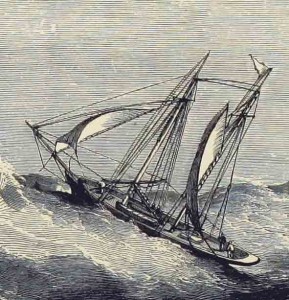
I just watched a documentary recounting the mysterious disappearance of ships and planes, including five US bombersShipSorm on a training mission, in the Bermuda Triangle off Florida in the North Atlantic. Everything from alien abduction to sudden eruptions of methane hydrate gas have been blamed for the losses.

Well, we have our very own ship-devouring triangle right here in the eastern end of Lake Ontario, known as the Marysburgh Vortex.  When steamboats and schooners ruled, more than two thirds of Lake Ontario shipwrecks occurred in the Vortex.  Mysterious fogs arise, storms whip up with terrifying speed, magnetic anomalies send compasses awry.  The region also contains Charity Shoal, a large circular crater  likely from a meteor hit.

Over 100 vessels have vanished into the Marysburgh Vortex.  A storied local example is the schooner Picton, carrying coal from Charlotte, Rochester in the US to Belleville, Ontario.  The Picton set out with two other vessels.  Before their eyes, the Picton vanished from sight.  Weeks later, a message in bottle later from the captain said he had tied himself to his son so they should be found together.  No bodies were ever found.  There is also the strange case of the Bavaria, a schooner found seaworthy, intact and undisturbed, but with the crew completely vanished.  No trace of them was ever found either.M-Vortex

The Marysburgh Vortex has been studied extensively by both the US and Canadian governments, investigating why many have come to grief. I don’t know whether they spotted any extraterrestrials at work.

For all those who love marine mysteries, and who want to be forewarned when sailing into the smiling waters that contain such hidden danger, here are a couple of sites with some fascinating reading.


Strange Cures from the Past for Whooping Cough

Historical research for my sequel to The Tomorrow Country, turns up a lot of weird stuff.

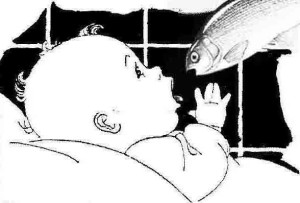
Fish3Cures for whooping cough, for instance.

In Ireland, in the 1600s, folks put a live trout in the sick child’s mouth then released it into the river to carry off the disease.

In England, parents let a sheep breathe on the child, then laid the youngster down where the sheep had been sleeping. If that didn’t work, the parents could always dig a hole, hold the child head down in it with a turf over him until the child coughed.

Breathing in fumes from hot road tar was tried. Or you could set the sufferer on a donkey, facing the donkey’s tail, and hand him or her a roasted mouse to eat.

Amusing as these efforts seem today, they were often the only resort of desperate parents who would try just about anything to save their baby.  Lucky us that we don’t have to fricassee mice or chase the paving machine.  I wonder how much today’s medicine will seem benighted and hilarious in a couple of hundred years.


Garter Snakes Emerge, Have Love Fest, Depart. A Rite of Spring.

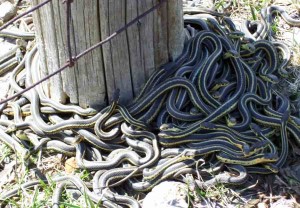
Old fence post is magic portal to snake world in spring.

Old fence post is magic portal to snake world in spring.

There’s a certain weathered fence post that does nothing but look unremarkable and hold up page wire through summer droughts and winter’s blizzards.

Except for the first warm weeks of spring.

Then the post becomes the exit portal for the underground limestone palace where the garter snakes have been dozing away the icy months.  But when the bright spring sun calls, they twitch awake and emerge by the dozens from the gravel around the bottom of the post.

Where are you, darling?  I know you're in here somewhere.

Darling, I know you’re in here somewhere.

We watch to see when the first ones come out for it means spring has truly arrived.  If it is cold, they look around and go back.  But more and more linger topside.  When convinced the sun will stay, they collect in writhing heaps in the grass behind the post.  It’s a mating frenzy and a shameless sex orgy and they don’t care how many people gawk from cars whipping past.

Female pheromones bring males snakes in hordes. As many as 25 males per female induces a fiercely competitive frenzy. But after the fun has come to an end, each snake sets out for a solitary summer of sunning itself and gulping insects, mice and frogs.  The much-courted female incubates her young inside her body and, after two or three months, gives birth to them live. She can also store male sperm for years though it does seem the annual orgy would be way more enjoyable.

The party's over.  Now for a summer of eating frogs and staying off the road.

The party’s over. Now for a lazy summer of gobbling frogs and trying to stay off the road.

I’ll be watching for my little pal garter snake who lives in the bricks by the door and hangs out among the irises when the sun is out.  Maybe there will be babies.  If there are, I’ll know exactly how she spent her first day out of hibernation.

Hey, Frazzled Urbanites, Rest Your Eyes With Some Peaceful Rural Pics

Here are a few snapshots from my neighbourhood.  Enjoy!

This slideshow requires JavaScript.

The Marsh is Afire. Flee, Birdies, Flee!

When the snow finally melts, it leaves the land covered with tinder dry brown grass and the marshes full of last year’s dead reeds.  They also burn like hot  paper even though the marsh is wet underneath. It takes weeks for new green reeds to grow up enough to end the fire hazard.  In the meantime, red winged blackbirds build nests  in the reeds, ducks and geese nest in their shelter, laying eggs and hatching little ones.

So, when awakened at 3 am by a weirdly orange sky and wavering light that shouldn’t be there beyond the edge of the hill, I knew the reeds were on fire.  For those of us with houses and barns on the edge of the flammable marsh, this is always our spring anxiety.  I bolted out of bed, and drove off down the road to find the source. There is always the chance that a marsh fire at night might not be noticed until far out of control.

This slideshow requires JavaScript.

This one was east of the causeway to Big Island and spectacular in size.  Driven by a strong west wind, it  swept in a fiery wall through the middle of the marsh and licked up with roaring flames along the shore.  It had been noticed.  Most of the county fire trucks and some from Belleville were called in. In the end, it took 20 trucks and 40 firemen working through the night to control the blaze.  Firefighters have to don heavy back packs and slog out into the marsh itself to spray the flames, a hard, hot, laborious process.

By morning, there were acres of blackened marsh with stubborn, scattered blazes left to occupy the weary firefighters. This one was early enough so that I hope there were no nestlings yet to incinerate. The causeway kept the fire from my side of the marsh this time.  No one knows how such a spread out fire got started.  There are still those who are idiot enough to toss cigarette butts from their cars.  Or perhaps start marsh fires for fun.  Those folks, as our local nature guru growls, need to be strung up by their  “cojones”.

Now we all fervently hope fire is done playing with us here for at least another year.